
The other gender pay gap
The gender pay gap does not disappear when work ends. If anything, it gets worse.

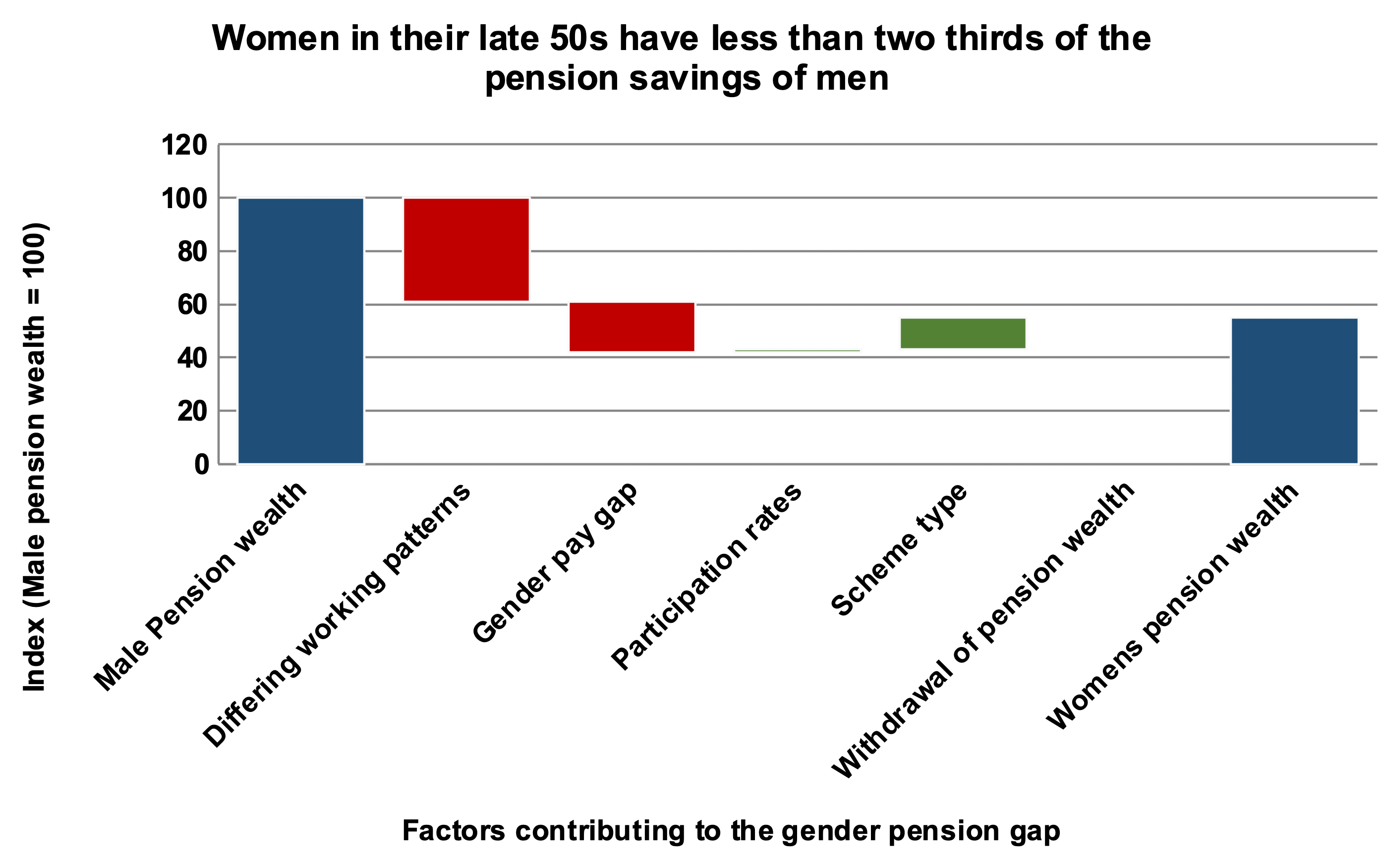
Source: PPI
How wide is the gender pay gap? The answer might surprise you. The most recent assessment from the Office for National Statistics (ONS) puts the gap for full-time employees in April 2025 at 6.9%. In 2005, the ONS figure was nearly twice as much – 13%.
However, there is another gender pay gap where the difference between the sexes is far greater – the gender pension gap. A new report from the Pension Policy Institute (PPI) has highlighted the gap – chasm might be a better description – in pension wealth between men and women in their late 50s, typically within ten years of retirement.
The graph above is based on men and women aged 57 and shows a gap of 46%. Viewed from the male perspective, this means on average a 57-year-old man has 85% more in his pension pot than a woman of the same age. The PPI attributes the yawning gap to a variety of factors, with the two main ones being:
- Differing working patterns: The proportion of women in employment is lower than for men (75% vs 82%). Among those who are in employment, more women tend to work part-time (33% vs 10%), often because they are a family’s primary caregiver. The gender pay gap for part-time work favours women – the ONS says women part-timers earn 2.9% more than their male counterparts. The snag is that while the pay rate may be higher, total earnings are lower than for full-time work.
- Gender pay gap: Pension contributions are normally linked to pay – contributions are often a percentage of salary. As women on the whole earn less than men, the same percentage contribution produces a smaller cash contribution and so a smaller pension pot. At low earnings levels, this can be exacerbated by the automatic enrolment rules, which exclude anyone earning up to £10,000 a year and, for those who are enrolled, ignore the first £6,240 of earnings in calculating contributions. That equates to about £500 a year of contributions (at 8%) that are not made.
If you find yourself on the wrong side of the pension gender gap, consider increasing your personal pension contributions if possible. And take advice on your overall retirement planning. Read more about the gender pay gap here.